
Solutions and Consulting: With decades of experience, DELIECN provides intelligent warehousing & logistics solutions and consulting services for clients across a wide range of industries.
Learn More
Solutions and Consulting: With decades of experience, DELIECN provides intelligent warehousing & logistics solutions and consulting services for clients across a wide range of industries.
Learn More
Solutions and Consulting: With decades of experience, DELIECN provides intelligent warehousing & logistics solutions and consulting services for clients across a wide range of industries.
Learn More
Solutions and consulting: DELIECN has decades of experience providing logistics & warehouse automation for the key industries.
Learn More
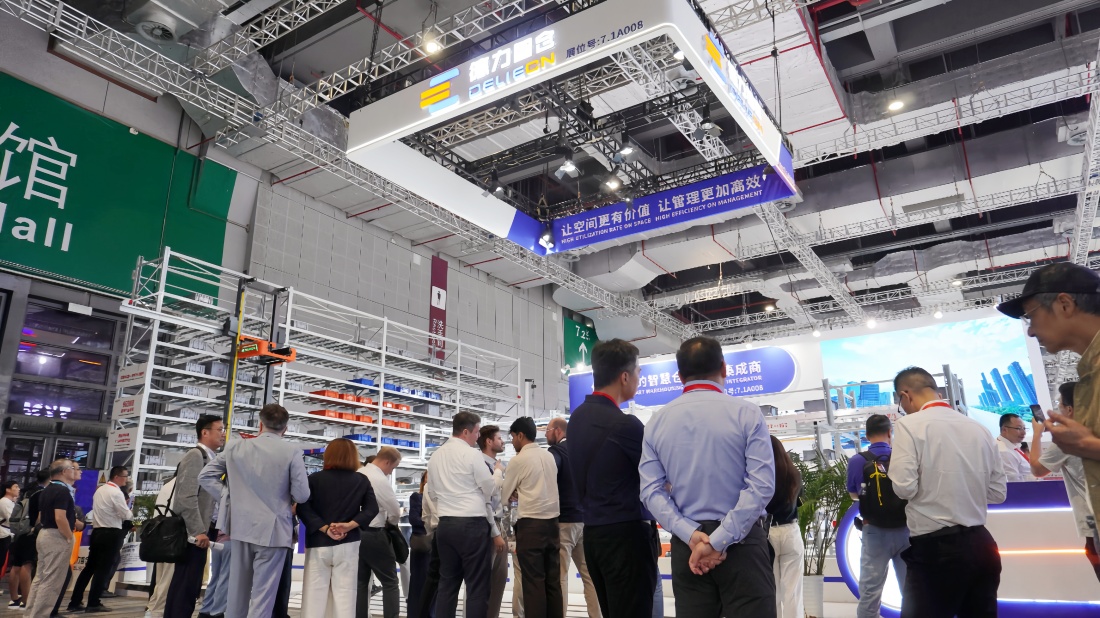
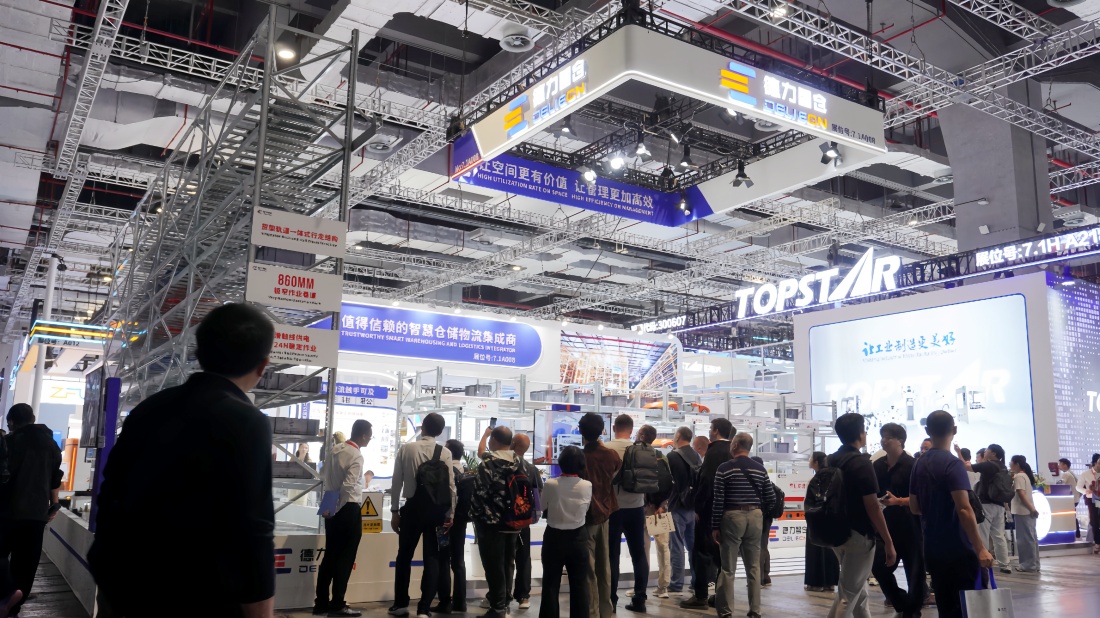
At the DELIECN booth at CIIF 2026, visitors frequently stopped at Mini-FlyBox to ask about its load capacity and applications. Several conversations went further, with customers describing warehouses they were planning or picking operations they wanted to improve.
A visitor from South Korea was considering an automated tote warehouse for components. A Polish customer wanted to reduce the time spent on manual picking in a distribution centre. A visitor from the United States asked what the complete system would cost.
Their questions approached Mini-FlyBox from different directions, but each came back to a practical decision: could this compact storage system make better use of their building and justify the investment?
The South Korean customer was planning a component tote AS/RS and wanted to know whether Mini-FlyBox could be used for the project.
The answer was yes: component storage using suitable totes with loads of up to 50 kg falls within the intended applications of Mini-FlyBox. The next step would be to develop the layout around the customer’s tote specifications, inventory and required handling capacity.
That conversation illustrates where the system fits. Manufacturers often need to accommodate a growing range of small components while keeping materials accessible for picking and production. Conventional shelves can become difficult to manage as the number of locations increases, particularly when operators make frequent trips to retrieve small quantities.
Mini-FlyBox combines automated tote storage with a route to goods-to-person picking. It can work with conveyors, tote AMRs and picking workstations, allowing the storage arrangement to support the work that follows retrieval.
The Polish customer described a more immediate operating problem. Their distribution centre relied on manual picking, which was time-consuming and delivered limited efficiency. The warehouse was 9 m high, with a floor area of approximately 3,000 m².
Those building dimensions and the need to replace repeated manual retrieval made it a particularly relevant application for Mini-FlyBox, which is designed for space-constrained facilities under 12 m high.
The customer was curious about the connection between automated storage and the picker: how would Mini-FlyBox actually bring a tote to a person?
Inside the rack, the robot retrieves the required tote and brings it to a transfer point at the first level. A tote AMR can collect it and transport it to a picking workstation; conveyors offer another connection option. The operator picks the required items there, and the tote can then return through the AMR/conveyor–Mini-FlyBox for storage.
The operator therefore works at a designated station while the system handles the journeys to and from storage. For a distribution centre, this reduces the walking and searching that occupy so much of a manual picking shift.
The proposed layout would still need to match the customer’s peak order demand. Robot retrieval, AMR movements and workstation capacity have to be considered together. Mini-FlyBox can support an operating efficiency improvement of around 80%, depending on the process being replaced and the final configuration.
Space was another reason visitors looked closely at the equipment.
Mini-FlyBox integrates its travel rails into the rack structure. The robot moves horizontally and between storage levels within the rack frame, supporting a compact arrangement without leaving those movements to separate floor-level transport routes.
Aisles can be as narrow as 860 mm. Depending on tote dimensions, building conditions and the conventional storage method used for comparison, storage capacity can reach 3–10 times the original capacity.
For a business considering an additional warehouse, that creates a useful alternative to examine. Recovering enough capacity inside the existing building may reduce the need for overflow storage and transfers between sites. The benefit depends on how many usable locations the layout provides while retaining the required picking output.
A visitor from the United States asked about the price of the complete Mini-FlyBox system. It was a direct question, and one shared by many buyers evaluating warehouse automation.
A meaningful quotation needs a defined scope: rack dimensions, tote locations, robot quantity, handling demand, software and the connection to picking stations. The price changes with those requirements.
The integrated rack-and-robot structure is relevant to that calculation. Narrow aisles and dense storage allow more locations to fit within a given footprint, while automated retrieval and goods-to-person handling can reduce manual travel. Together, these features can improve the investment return per unit of space and handling capacity.
For the buyer, the comparison should include the cost per usable tote location and the cost of meeting the required picking output. Avoided rent, reduced overtime or additional orders processed provide a firmer basis for assessing returns than equipment price alone.
DELIECN Mini-FlyBox has already been applied at a Toyota automotive spare parts centre, where the small-parts area uses 18 Mini-FlyBox robots and provides more than 17,000 tote locations, with a handling capacity of 870 order lines per hour.
This application gives customers a working reference for combining dense component storage with goods-to-person picking. Mini-FlyBox also uses a conductor rail power supply, supporting stable 24/7 operation without battery-charging stops, alongside planned maintenance.
CIIF opened the door to deeper discussions about where Mini-FlyBox could fit into customers’ operations. Next stop: CeMAT ASIA 2026. DELIECN booth Hall W3-E4 .We look forward to exploring more applications with customers and working through their specific challenges in tote storage, retrieval and goods-to-person picking.