
Solutions and Consulting: With decades of experience, DELIECN provides intelligent warehousing & logistics solutions and consulting services for clients across a wide range of industries.
Learn More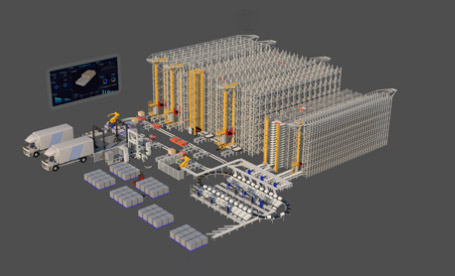
Solutions and Consulting: With decades of experience, DELIECN provides intelligent warehousing & logistics solutions and consulting services for clients across a wide range of industries.
Learn More
Solutions and Consulting: With decades of experience, DELIECN provides intelligent warehousing & logistics solutions and consulting services for clients across a wide range of industries.
Learn More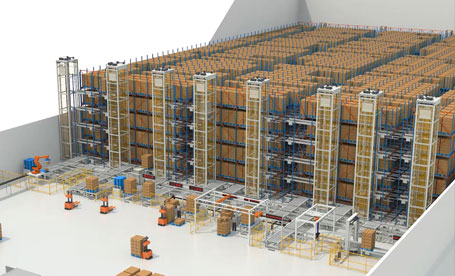
Solutions and consulting: DELIECN has decades of experience providing logistics & warehouse automation for the key industries.
Learn More
In battery material plants, the gap between warehouse management and production execution often becomes the bottleneck. Inventory may exist, but line feeding can still be delayed due to task sequencing, handoff inefficiencies, or visibility gaps between systems.
Common symptoms of disconnected systems include:
A widely used structure is:
In this model, WMS “knows” inventory and rules; WCS “executes” tasks with real-time constraints.
In the referenced project, the automated warehouse was designed within fixed civil constraints:
Material flows covered raw materials and finished goods with automated handoffs to production logistics.
Use case A — Production line supply triggers
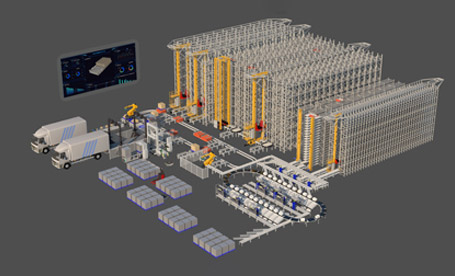
Many large plants add a visualization layer to support:
A digital twin is most valuable when it reflects execution data (not only 3D models).
Typical success factors include: