
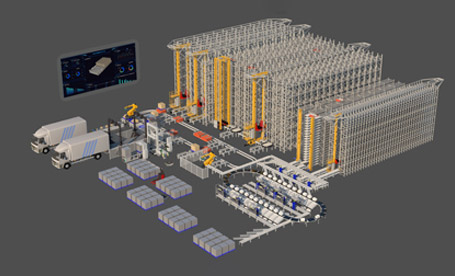
Solutions and Consulting: With decades of experience, DELIECN provides intelligent warehousing & logistics solutions and consulting services for clients across a wide range of industries.
Learn More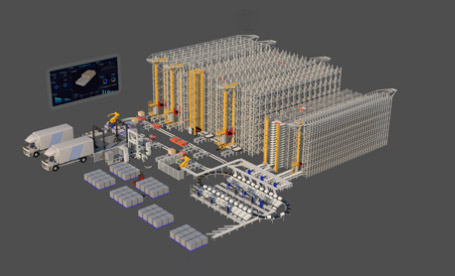
Solutions and Consulting: With decades of experience, DELIECN provides intelligent warehousing & logistics solutions and consulting services for clients across a wide range of industries.
Learn More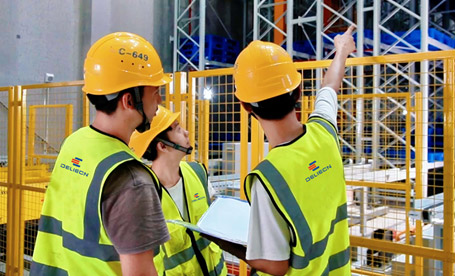
Solutions and Consulting: With decades of experience, DELIECN provides intelligent warehousing & logistics solutions and consulting services for clients across a wide range of industries.
Learn More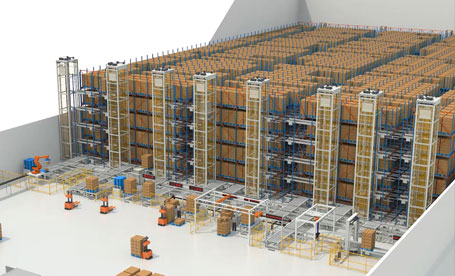
Solutions and consulting: DELIECN has decades of experience providing logistics & warehouse automation for the key industries.
Learn More
As warehouse and manufacturing operations become more demanding, companies are under increasing pressure to improve storage density, inventory control, and material flow. One technology widely used to address these challenges is the Automated Storage and Retrieval System (AS/RS).
An AS/RS is not a single machine. It is a system architecture that combines storage structures, automated handling equipment, controls, and software to place goods into storage locations and retrieve them when needed. Depending on the application, AS/RS can handle pallets, totes, cartons, trays, and other unit loads.
AS/RS stands for Automated Storage and Retrieval System. In industrial and logistics environments, the term refers to storage systems that use automation to carry out putaway and retrieval tasks with limited manual intervention.
These systems are commonly used where operations require:
• structured inventory storage
• improved use of vertical space
• reduced manual travel
• higher process consistency
• integration with warehouse or production software
Although system configurations vary, the basic operating principle is similar across most AS/RS projects.
First, the load is identified and verified. This may include barcode scanning, dimension checks, weight checks, or system registration. The software then assigns a storage location based on predefined rules such as SKU type, batch, turnover frequency, or FIFO logic.
The load is moved by automated equipment such as conveyors, lifts, shuttles, or stacker cranes into the storage zone. When a retrieval order is released, the system brings the required load to an output point, picking station, buffer area, or production interface.
In most projects, this process is coordinated through software layers such as:
• WMS (Warehouse Management System)
• WCS (Warehouse Control System)
• interfaces to ERP or MES, where required
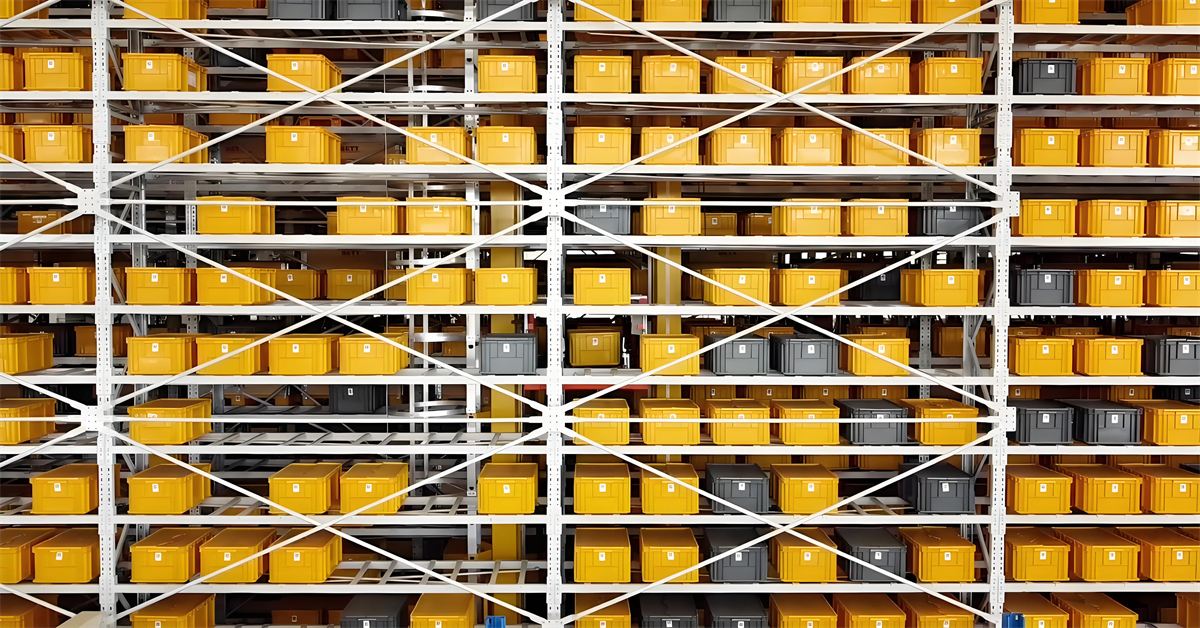
In practice, AS/RS is often discussed in two common categories: pallet AS/RS and tote/bin AS/RS.
Pallet AS/RS is generally used for palletised or heavier loads. These systems are common in manufacturing plants, cold storage warehouses, and finished goods distribution environments.
Tote or bin AS/RS is designed for smaller load carriers, such as totes, bins, trays, or cartons. These systems are often selected for higher-SKU environments where storage density and picking responsiveness are both important.
Note: Depending on the application, AS/RS can also be configured for cartons, trays, and other special load types. In practice, pallet and tote/bin systems are simply two of the most common categories.
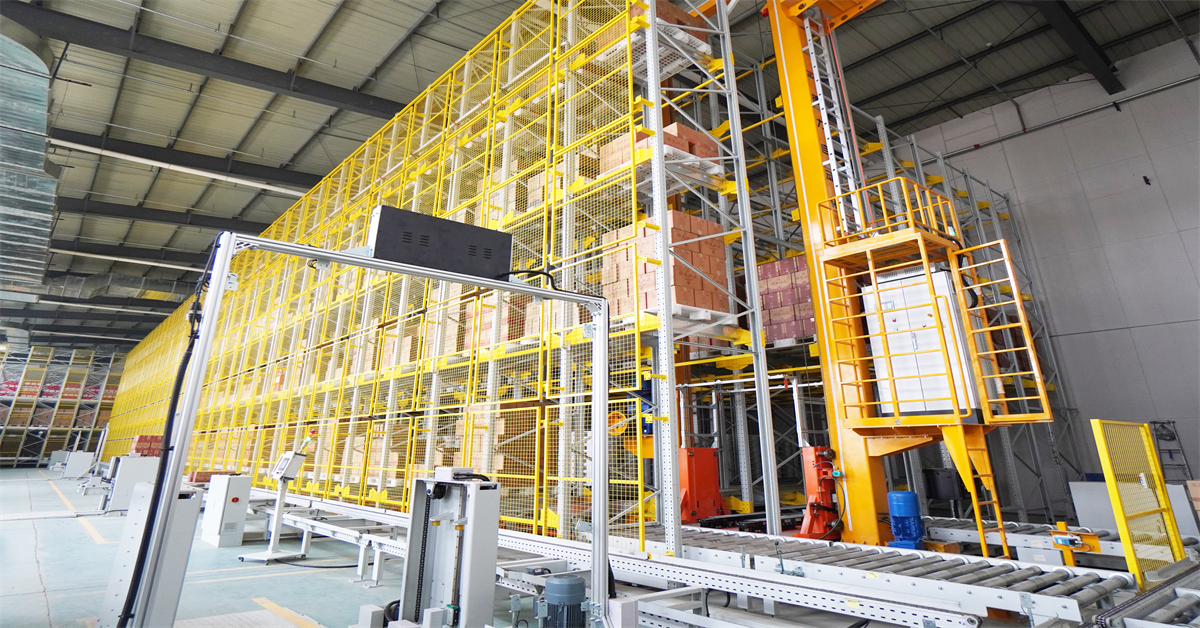
Stacker-crane systems are commonly used in high-bay automated warehouses and can be designed for pallet or tote handling, depending on the application.
Shuttle systems can be configured for pallet or tote handling. They are often used where a project requires a balance of density, flexibility, and scalable throughput.
A VLM is a vertical storage system that automatically delivers trays to an access opening. It is commonly used in spare parts, tools, electronics, maintenance, and industrial storage applications where floor space is limited.
A complete AS/RS usually includes several coordinated elements:
This may include pallet racking, tote racks, tray systems, or other engineered storage positions.
Depending on the system type, this may include:
• stacker cranes
• shuttle robots
• lifts
• conveyors
• transfer cars
• integrated AGVs or AMRs
The software layer is critical for inventory location control, order execution, routing logic, equipment coordination, and interface management.
Barcode readers, RFID devices, photoelectric sensors, and load verification devices are often used to improve traceability and system control.
Companies typically evaluate AS/RS when conventional storage methods start creating operational constraints.
Common benefits may include:
AS/RS can support more structured use of vertical space and reduce dependence on wide forklift aisles. The actual space improvement depends on layout, load profile, fire regulations, and building conditions.
Because stock locations are system-managed, AS/RS can help support more consistent inventory records and better traceability.
AS/RS can reduce forklift travel, manual walking, and repetitive storage tasks, especially in larger or higher-throughput operations.
In manufacturing and distribution settings, automation can support more predictable movement between storage, picking, production, and dispatch.
AS/RS is often used in cold storage, batch-controlled industries, and applications that require structured handling.
AS/RS is applied across a wide range of sectors, including:
• manufacturing
• automotive
• food and beverage
• pharmaceuticals
• electronics
• chemicals
• e-commerce
• spare parts distribution
It is particularly relevant where operations face one or more of the following conditions:
• limited floor space
• high building height
• large inventory volume
• high SKU count
• traceability requirements
• pressure on labour availability
Before selecting an AS/RS solution, companies should assess:
• load dimensions and mass (kg or t)
• required storage capacity
• peak inbound and outbound throughput
• building height (m) and floor conditions
• temperature requirements
• SKU structure and inventory rules
• software integration needs
• maintenance and lifecycle planning
An AS/RS project is usually most successful when equipment selection follows a clear operational analysis rather than starting from a preferred machine type.
An Automated Storage and Retrieval System (AS/RS) is a structured combination of storage equipment, controls, and software used to automate the storage and retrieval of goods. It can support better use of space, more controlled inventory handling, and more consistent material flow when designed around the actual needs of the operation.
The most appropriate AS/RS solution depends on the load profile, process requirements, site constraints, and integration scope. For that reason, solution selection should be based on data, not only on equipment preference.
Looking to evaluate whether AS/RS is suitable for your operation?
Explore automated warehouse solutions based on your load type, throughput requirements, and site conditions.