
Solutions and Consulting: With decades of experience, DELIECN provides intelligent warehousing & logistics solutions and consulting services for clients across a wide range of industries.
Learn More
Solutions and Consulting: With decades of experience, DELIECN provides intelligent warehousing & logistics solutions and consulting services for clients across a wide range of industries.
Learn More
Solutions and Consulting: With decades of experience, DELIECN provides intelligent warehousing & logistics solutions and consulting services for clients across a wide range of industries.
Learn More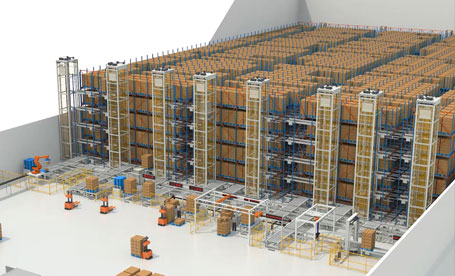
Solutions and consulting: DELIECN has decades of experience providing logistics & warehouse automation for the key industries.
Learn More
As heavy-industry supply chains become more dynamic, warehouse design is shifting from static storage to orchestrated material flow.
For one leading coal-sector enterprise with operations across mining, coal preparation, coking, power generation, and fine chemicals, the challenge was clear: traditional warehouse operations were increasingly difficult to scale across diverse, heavy, and distributed inventory.
The company launched a new materials distribution center and required a system that could support:
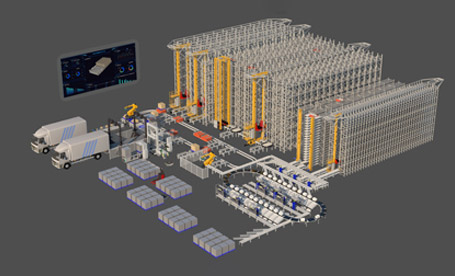
The project was designed as an integrated intralogistics architecture rather than isolated equipment upgrades. The solution combines:
This multi-zone design supports distinct inventory characteristics in parallel: standard spare parts, irregular/long materials, small consumables, and controlled materials that require stricter process governance.
A single storage logic is rarely effective when inventory includes both standard pallets and non-standard components.
The center was therefore planned with dedicated areas (AS/RS zone, irregular-goods zone, steel-platform zone, cantilever-rack zone, VLM zone), allowing handling and storage methods to match product geometry, weight class, and turnover frequency.
The result is a more balanced operation: improved space utilization (approximately +50% versus prior baseline), reduced manual travel intensity, and more consistent execution across inbound, storage, picking, and dispatch.
Beyond hardware, the project introduced end-to-end digital control:
For heavy-industry operators, this enables better decision cycles and more transparent warehouse governance, especially where inventory value, handling risk, and supply continuity must be managed together.
In complex industrial environments, performance gains often come from system coordination rather than single-machine speed.
A modular architecture that combines physical automation with operational software can provide a practical path to safer handling, higher storage efficiency, and more controllable growth.